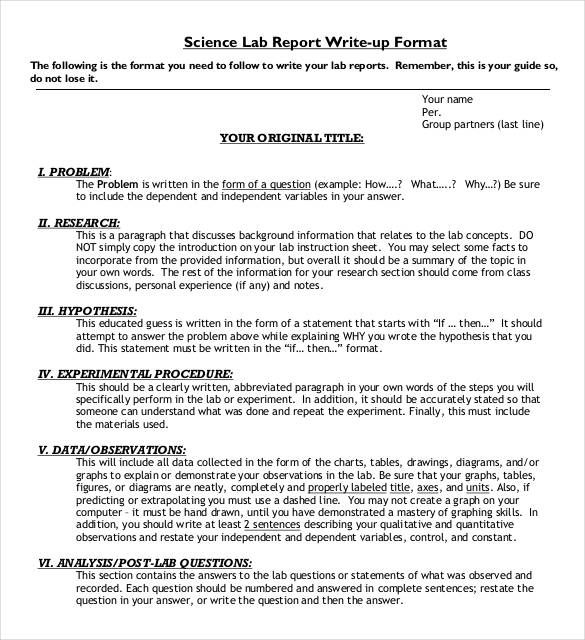
The meticulous documentation of scientific experiments is paramount to ensuring reproducibility, validating findings, and advancing knowledge within the scientific community. A well-structured science experiment report provides a clear and comprehensive record of the entire process, from initial hypothesis to final analysis. This template offers a framework for creating a robust and easily understandable report, crucial for researchers, students, and anyone involved in scientific endeavors. Science Experiment Report Template is more than just a document; it's a tool for transparency and collaboration. It allows others to scrutinize your methodology, understand your results, and build upon your work. A clear and detailed report not only enhances the credibility of your research but also facilitates future investigations. This template is designed to be adaptable to a wide range of scientific disciplines, from biology and chemistry to physics and environmental science. Let's explore how to construct a compelling and effective science experiment report.
Understanding the Purpose of a Science Experiment Report
Before diving into the specific sections of the template, it's important to understand why a science experiment report is so vital. It's not simply a summary of what happened during the experiment. It's a narrative that explains how the experiment was conducted, what results were obtained, and why those results are significant. A good report demonstrates critical thinking, analytical skills, and a commitment to rigorous scientific practice. Furthermore, it's a crucial component of scientific publishing, ensuring that your work is accessible to a wider audience. The report allows reviewers to assess the validity of your methods, the reliability of your data, and the overall quality of your research. Without a well-crafted report, your experiment risks being overlooked or misinterpreted.
Defining the Experiment and Hypothesis
The foundation of any successful science experiment is a clearly defined experiment and a testable hypothesis. The hypothesis is a proposed explanation for the observed phenomenon, a tentative answer to a question. It's crucial to state the hypothesis explicitly and concisely. A poorly defined hypothesis will lead to a flawed experiment and potentially misleading results. For example, instead of simply stating "Plants grow better with sunlight," a more specific hypothesis might be "Plants exposed to 8 hours of direct sunlight per day will exhibit a greater increase in height compared to plants exposed to 4 hours of direct sunlight per day." The experiment itself should be designed to test this hypothesis. Consider the variables involved – independent, dependent, and controlled – and how they will be manipulated to observe the effect. A robust hypothesis is a starting point for a well-designed experiment.
Detailed Experimental Procedure
The experimental procedure is the roadmap of your experiment. It outlines exactly how you conducted the experiment, step-by-step. This section should be detailed enough that another researcher could replicate your experiment exactly. Include information such as:
- Materials: A complete list of all materials used, including quantities.
- Equipment: Description of the equipment used and its calibration.
- Procedure: A numbered, sequential description of each step taken during the experiment. Use precise language and avoid ambiguity.
- Controls: Describe any control groups used and their purpose. A control group is essential for establishing a baseline and determining the effect of the independent variable.
- Data Collection: Explain how data was collected (e.g., measurements, observations, photographs).
Data Collection and Analysis
Once the experiment is complete, the next step is to collect and analyze the data. This involves systematically recording and organizing the data obtained during the experiment. Statistical analysis may be required to determine the significance of the results. The choice of statistical tests depends on the type of data collected and the research question being addressed. Proper data management is critical for ensuring the accuracy and reliability of your results. Consider using spreadsheets (e.g., Excel, Google Sheets) to organize and analyze your data. Clearly label each data table and figure.
Results and Discussion
The results section presents the findings of your experiment. This section should be objective and factual, presenting the data without interpretation. Clearly state the results of your analysis, using tables and figures to illustrate the key findings. The discussion section interprets the results in the context of your hypothesis and the existing literature. It addresses any unexpected findings and explains potential reasons for them. It's important to acknowledge any limitations of your experiment and suggest areas for future research. Don't overstate your conclusions; avoid making claims that are not supported by the data.
Conclusion and Future Directions
The conclusion summarizes the main findings of the experiment and reiterates the significance of the results. It should clearly state whether the hypothesis was supported or refuted. Briefly discuss the implications of your findings and suggest potential future research directions. A strong conclusion provides a sense of closure and reinforces the value of the experiment. It's a concise summary of the entire process, leaving the reader with a clear understanding of what was achieved and what remains to be explored. The conclusion should also acknowledge any potential biases or limitations that may have affected the results.
Appendix (Optional)
An appendix can include supplementary materials such as raw data, detailed protocols, or additional figures or tables. However, it's generally best to keep the appendix to a minimum and only include information that is not essential to the main body of the report.
Key Considerations for a Strong Report
Several key considerations contribute to a high-quality science experiment report. Clarity is paramount – your writing should be easy to understand. Accuracy is essential – ensure all data and procedures are correct. Objectivity is crucial – present your findings without bias. Completeness – ensure all necessary information is included. Proper formatting – use consistent headings, subheadings, and spacing. Finally, plagiarism must be avoided – always cite your sources properly.
Conclusion: The Importance of a Well-Crafted Science Experiment Report
In conclusion, a science experiment report is far more than a simple document; it's a vital tool for scientific communication, reproducibility, and advancement. By following the guidelines outlined in this template, researchers can ensure that their work is thoroughly documented, easily understood, and contributes meaningfully to the body of scientific knowledge. The ability to clearly articulate the methodology, results, and implications of an experiment is a hallmark of a skilled scientist. Investing time and effort in creating a robust and well-structured report demonstrates a commitment to rigorous scientific practice and enhances the credibility of your research. Remember, a well-crafted report is an investment in the future of scientific discovery.
Further Resources
- https://www.researchgate.net/publication/267783888/figuredownload/1877788867/fig1.figures.pdf
- https://www.sciencelearn.org.nz/resources/science-experiments
0 Response to "Science Experiment Report Template"
Posting Komentar