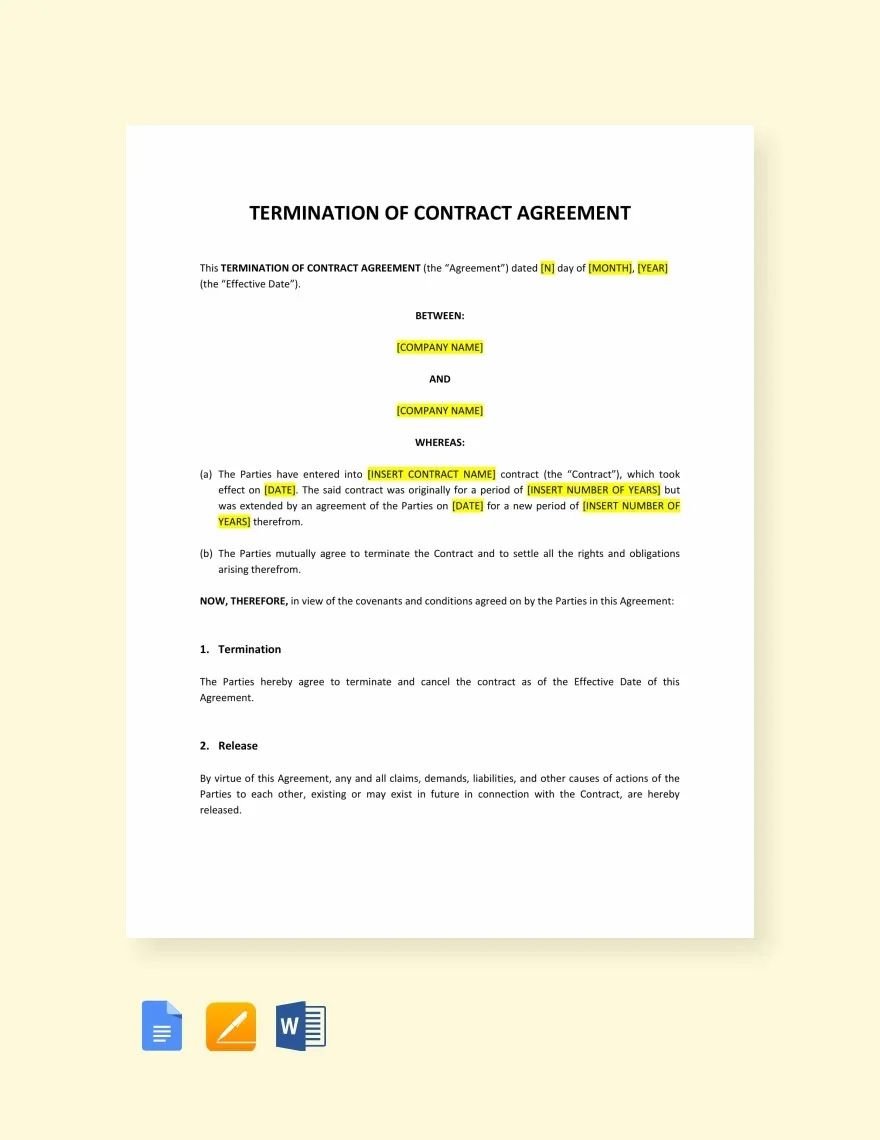
The landscape of business agreements is constantly evolving, and when a relationship needs to conclude, a well-structured and legally sound termination agreement is paramount. This article provides a comprehensive guide to creating a mutual agreement to terminate contract template, ensuring clarity, minimizing potential disputes, and protecting all parties involved. It's crucial to understand that this template is a starting point; it's vital to tailor it to the specific circumstances of the agreement and, ideally, consult with legal counsel to ensure full compliance with applicable laws and regulations. A thoughtfully drafted termination agreement can significantly reduce the risk of costly litigation and maintain a professional relationship, even in difficult situations. Ultimately, a clear and mutually agreed-upon termination clause fosters trust and facilitates a smooth transition. Let's delve into the key components and considerations involved in crafting a robust mutual agreement to terminate contract template.
Why is a Mutual Agreement to Terminate Contract Template Important?
The rise of remote work, changing business models, and evolving client expectations have dramatically altered the way businesses operate. These shifts often necessitate a more flexible and adaptable approach to contracts. A mutual agreement to terminate, rather than a rigid, one-sided termination clause, offers several advantages:
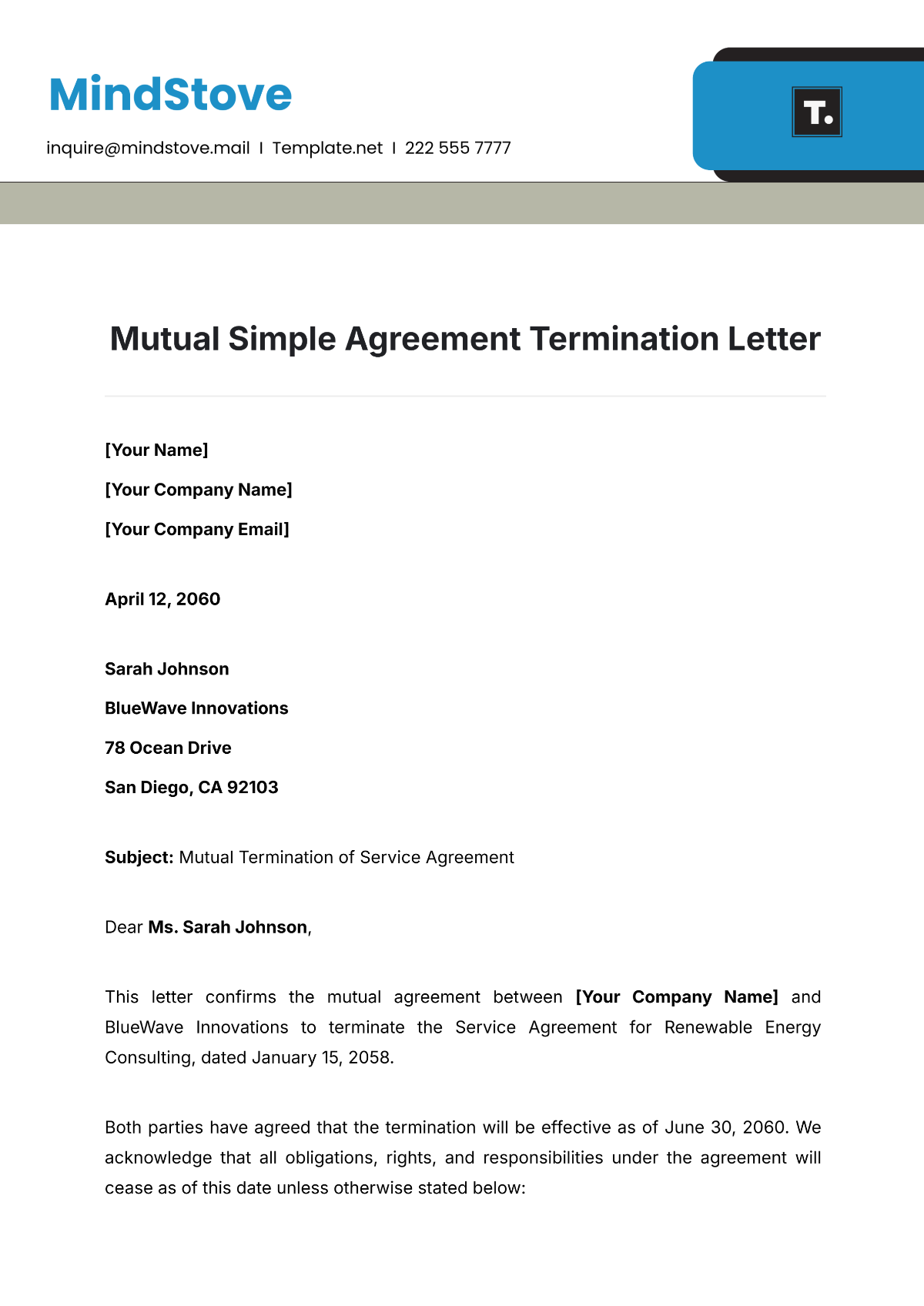
- Preserves Goodwill: It acknowledges the value of the relationship and allows for a more amicable departure.
- Reduces Legal Risk: A clearly defined termination clause minimizes the likelihood of disputes over asset distribution or payment obligations.
- Facilitates Smooth Transition: It streamlines the process of handover, ensuring minimal disruption for clients and employees.
- Protects Business Interests: It safeguards the business's interests by outlining the terms of the termination and addressing potential liabilities.
Key Components of a Mutual Agreement to Terminate Contract Template
A successful mutual agreement to terminate contract template typically incorporates several key elements. These elements are designed to be mutually agreeable and reflect the specific needs of the parties involved.
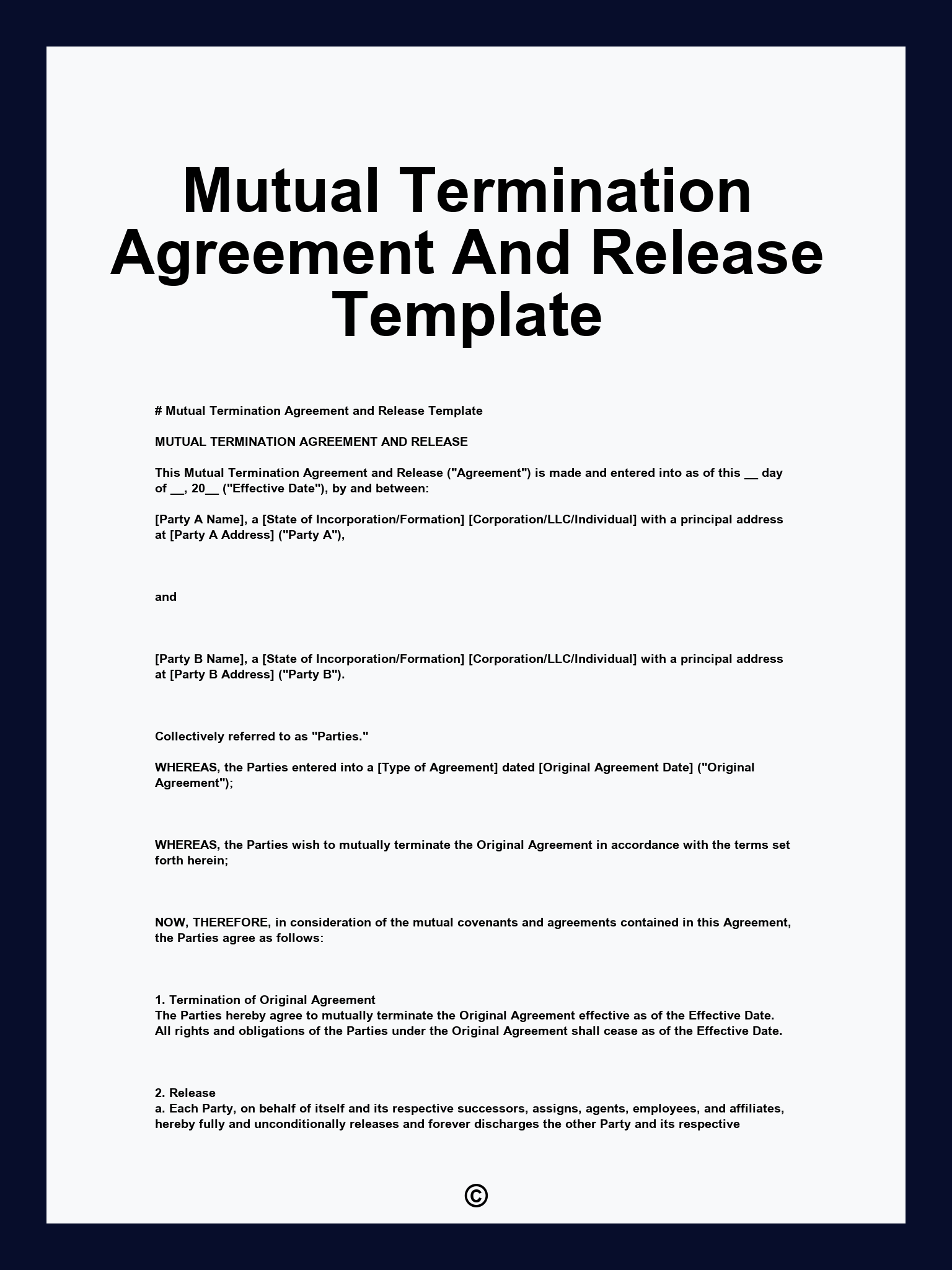
Clear Statement of Intent: The agreement should explicitly state the intention to terminate the contract. This is a fundamental requirement for establishing the basis for the termination.
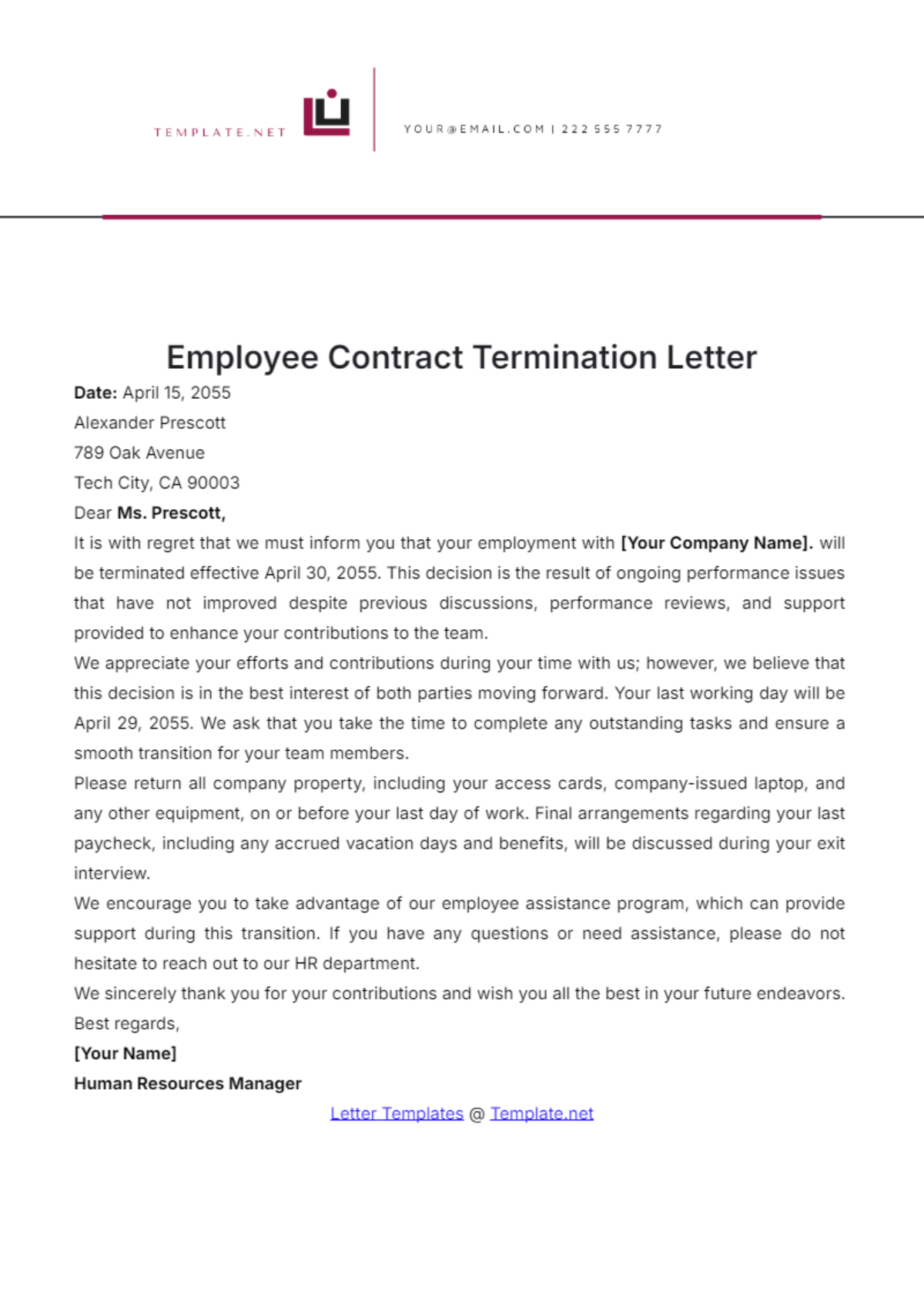
Reason for Termination: A detailed explanation of the reason for termination is crucial. This should be specific and avoid vague language. Common reasons include:

- Business Closure: The business has ceased operations.
- Change in Circumstances: Significant and unforeseen changes in the business's circumstances necessitate termination.
- Client Dissatisfaction: Client dissatisfaction leading to a breach of contract.
- Financial Difficulties: The business is experiencing significant financial difficulties.
- Mutual Agreement: Both parties agree to terminate the contract.
Effective Date: Specify the date on which the termination will take effect. This should be clearly defined and aligned with the reason for termination.

Transition Period: Outline a transition period, if applicable. This period allows for a smooth handover of responsibilities and minimizes disruption for clients and employees. The length of the transition period should be reasonable and agreed upon by both parties.
Asset Distribution: Address how assets will be distributed upon termination. This is a critical area and should be clearly defined to avoid disputes. Consider options such as:
- Return of Property: Return of all company property.
- Payment of Outstanding Obligations: Payment of any outstanding invoices or fees.
- Transfer of Intellectual Property: Transfer of any intellectual property rights.
Confidentiality Obligations: Reinforce confidentiality obligations during the termination period.
Non-Disparagement Clause: Include a clause prohibiting either party from making disparaging statements about the other party.
Governing Law and Dispute Resolution: Specify the governing law and the method for resolving disputes (e.g., mediation, arbitration).
Signatures: Both parties must sign the agreement to acknowledge their understanding and commitment to the terms.
Section 1: The Core of the Agreement – Defining the Termination
This section lays out the fundamental principles governing the termination process. It's the cornerstone of the agreement and should be carefully drafted to avoid ambiguity.
## 1.1 The Reason for Termination
This section explicitly states the reason for termination. It's vital to be precise and avoid overly broad language. For example, instead of saying "due to business difficulties," it's better to state "due to a significant decline in revenue resulting from a shift in market demand." The more specific the reason, the easier it will be to justify the termination and minimize potential disputes.
## 1.2 Effective Termination Date
The date on which the contract will be terminated is clearly stated. This date should be based on the reason for termination and should be mutually agreed upon. Consider the impact of the termination date on ongoing obligations and client relationships.
## 1.3 Transition Period (If Applicable)
If a transition period is required, it should be clearly defined, specifying the duration and the responsibilities of each party during this period. This period should be reasonable and allow for a smooth handover of responsibilities.
## 1.4 Asset Distribution – A Detailed Overview
This section provides a detailed explanation of how assets will be distributed upon termination. It's crucial to be specific about the types of assets that will be addressed and the process for determining the value of each asset. Consider including provisions for:
- Return of Property: Specify the process for returning company property, including inventory, equipment, and documents.
- Payment of Outstanding Obligations: Outline the process for calculating and paying any outstanding invoices, fees, and other obligations.
- Transfer of Intellectual Property: Clarify how intellectual property rights will be transferred, including any licensing agreements.
## 1.5 Confidentiality Obligations
This section reinforces the importance of confidentiality and prohibits either party from disclosing confidential information during the termination period. This is particularly important in industries where trade secrets or proprietary information are involved.
## 1.6 Non-Disparagement Clause
This clause protects the business's reputation by prohibiting either party from making disparaging statements about the other party. It's a standard provision that can help mitigate potential legal claims.
## 1.7 Governing Law and Dispute Resolution
This section specifies the governing law for the agreement and the method for resolving disputes. Common options include mediation and arbitration. Mediation is often preferred as it can be less adversarial and more cost-effective than litigation.
Section 2: Practical Considerations & Best Practices
Beyond the core components, several practical considerations are essential for creating a successful mutual agreement to terminate contract template.
### 2.1 Document Review and Approval
Before finalizing the agreement, both parties should carefully review and approve the document. It's advisable to have legal counsel review the agreement to ensure it's legally sound and protects the business's interests.
### 2.2 Clear Communication
Open and honest communication is crucial throughout the process. Discuss the terms of the termination with all relevant parties and address any concerns or questions promptly.
### 2.3 Documentation
Maintain thorough documentation of all communications, agreements, and actions related to the termination. This documentation can be invaluable in the event of a dispute.
### 2.4 Consider Legal Counsel
While this template provides a framework, it's essential to consult with legal counsel to ensure the agreement is tailored to the specific circumstances of the business and complies with applicable laws. A lawyer can also advise on the best approach to mitigate potential risks.
Conclusion
Creating a robust mutual agreement to terminate contract template is a critical step in managing business relationships effectively. By carefully considering the key components outlined in this article, businesses can minimize the risk of disputes, protect their interests, and facilitate a smooth transition. Remember that a well-crafted agreement is not just a legal document; it's a tool for building trust and maintaining a positive relationship with all parties involved. Ultimately, a proactive and well-considered approach to termination agreements can contribute significantly to the long-term success of the business. Investing in legal counsel is a prudent measure to ensure the agreement is legally sound and protects the business's interests.
0 Response to "Mutual Agreement To Terminate Contract Template"
Posting Komentar